Menu ×

When Pests Pose Questions, Neill Finds Answers..

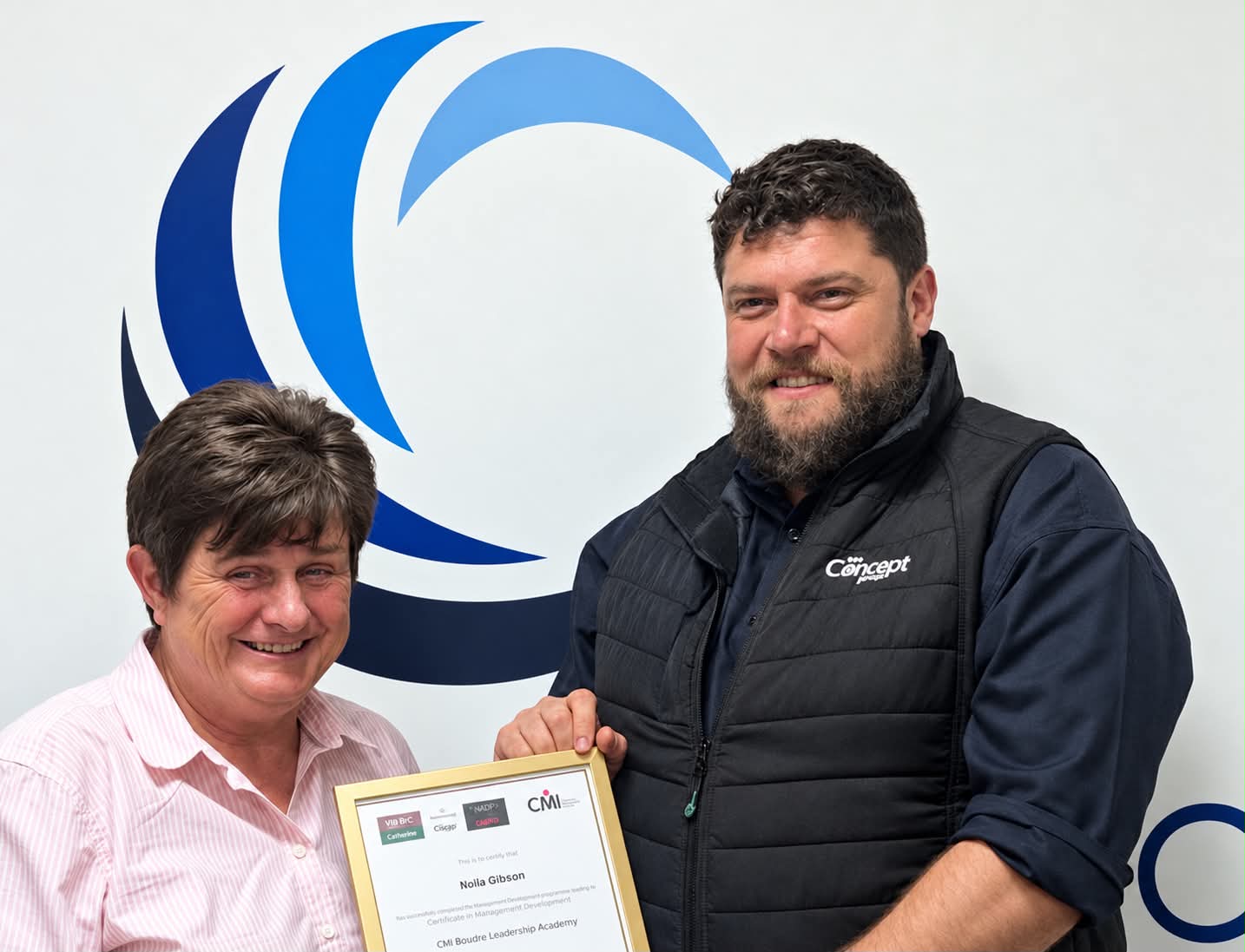
Some people shy away from a puzzle. Neill Gibson makes a career out of cracking them. From tracing hidden rodent routes to outsmarting persistent pigeons, Concept’s Operations Manager knows that effective pest management starts with getting to the bottom of the problem.

Now, his expertise takes centre stage in Professional Pest Controller, with the British Pest Control Association featuring Neill in “Puzzling it out: problem solving prowess with Concept”.

The feature explores his 13 years in the industry and the practical thinking behind protecting demanding environments, including Belfast Grand Central Station. Remote monitoring, drainage inspections and innovative bird control all play their part, backed by experience and careful investigation.

His approach to leadership is equally grounded: get involved, support your technicians and never ask someone to tackle a job you wouldn’t undertake yourself.

For The Concept Group, this is proud recognition of Neill and the wider Concept Pest Control team, whose knowledge, teamwork and determination turn complex challenges into practical solutions.

Congratulations, Neill. Leading from the front. Getting to the root. Giving us every reason to be proud.

Read the full BPCA feature⁠
Click to view article below:

https://ppconline.org/ppc123/puzzling-it-out?fbclid=IwZnRzaAVQVk5leHRuA2FlbQIxMQBwZG9mBWZkaWQWURNKex5nxUB89PUEbrLcDnPA8VV6FHNydGMGYXBwX2lkCjY2Mjg1NjgzNzkAAR9j59MMDLIKV_z2uvrLeYwzsohnDFyi_J218TNrf6ivlSxf4xLr0vGE2TbmYg_aem_i3rU9Tju3eCsxFN0gjBWXQ

Bluetongue cases surge in Ireland as threat to farms grows

Bluetongue is becoming an increasingly serious threat to Irish farms, with reported cases rising by 50% in just one week. The danger needs no open gate or broken fence. A single infected midge can carry it straight to your livestock.

The Irish Farmers Journal reported on 20 October that confirmed cases this season had reached 39 across 12 counties in the Republic of Ireland, up from 26 the previous week. Wexford accounted for 15 cases, making it the hotspot in that update.

Small insects, serious consequences

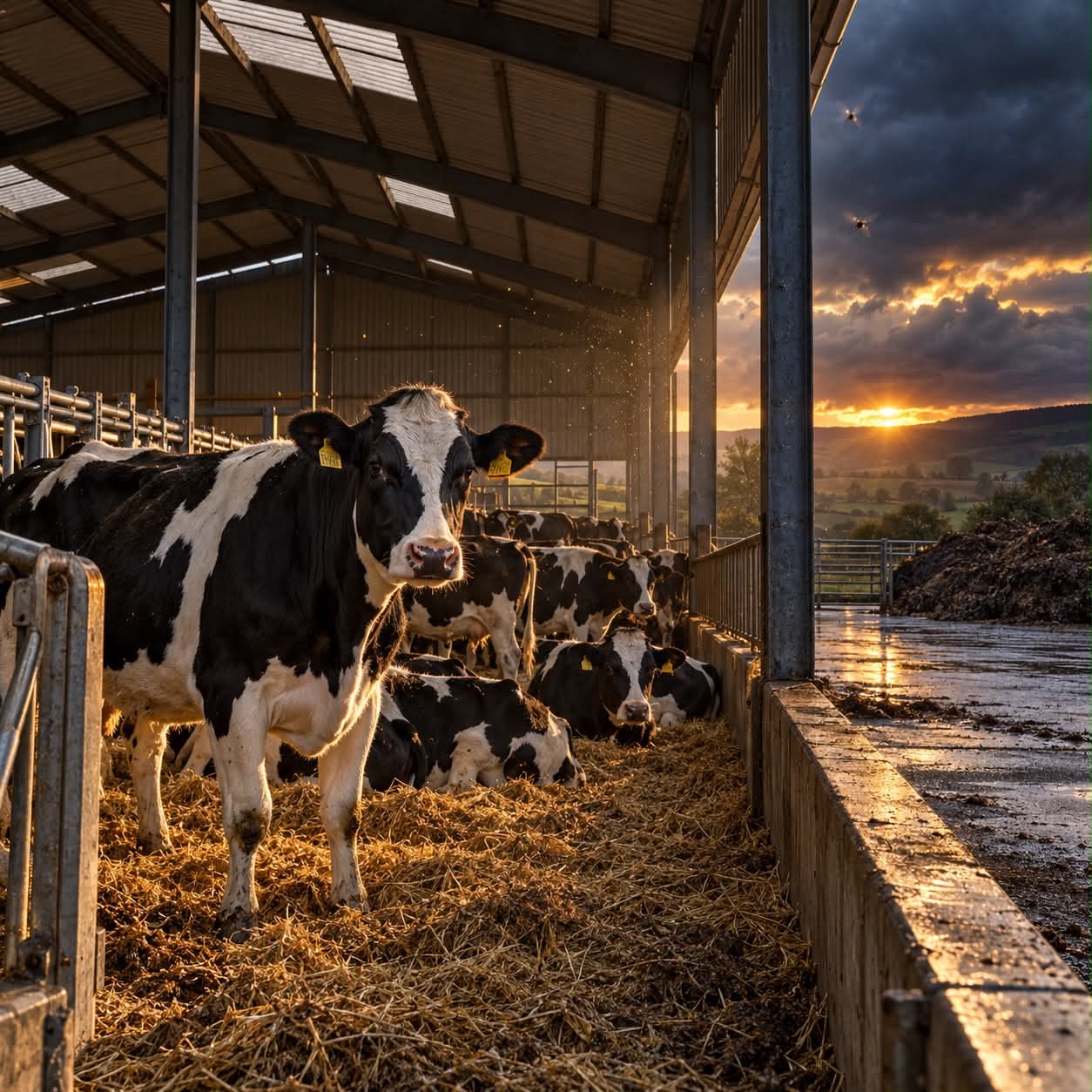
Bluetongue spreads mainly through infected Culicoides biting midges. They pick up the virus when feeding on an infected animal and can pass it to another through a subsequent bite. Wind can carry infected midges between locations, taking the threat beyond farm boundaries.

These midges breed in damp organic material, including manure, compost and moist soil. They are particularly active around dawn and dusk, with seasonal activity generally extending from April to November, depending on conditions.

Stay alert. Take practical action.

  • Keep muckheaps away from livestock and housing where practical, and review damp areas that could support midge breeding.
  • Watch for fever, drooling, mouth sores, facial swelling and lameness. Some infected cattle show few obvious signs.
  • Contact your vet immediately about suspected infection, follow official reporting requirements and discuss vaccination.

DON’T LEAVE FARM PEST MANAGEMENT TO CHANCE

Contact Concept Pest Control today to book a professional farm survey. We can assess pest activity, identify potential breeding areas and recommend practical pest management measures for your premises, supporting your farm management alongside your vet’s disease prevention advice.

T: +44 28 9061 0999
E: pestcontrol@the-concept-group.com
W: conceptpestcontrol.co

The Concept Group
FIVE Divisions | ONE Complete Solution

Silverfish: Small Pests, BIG Hints!

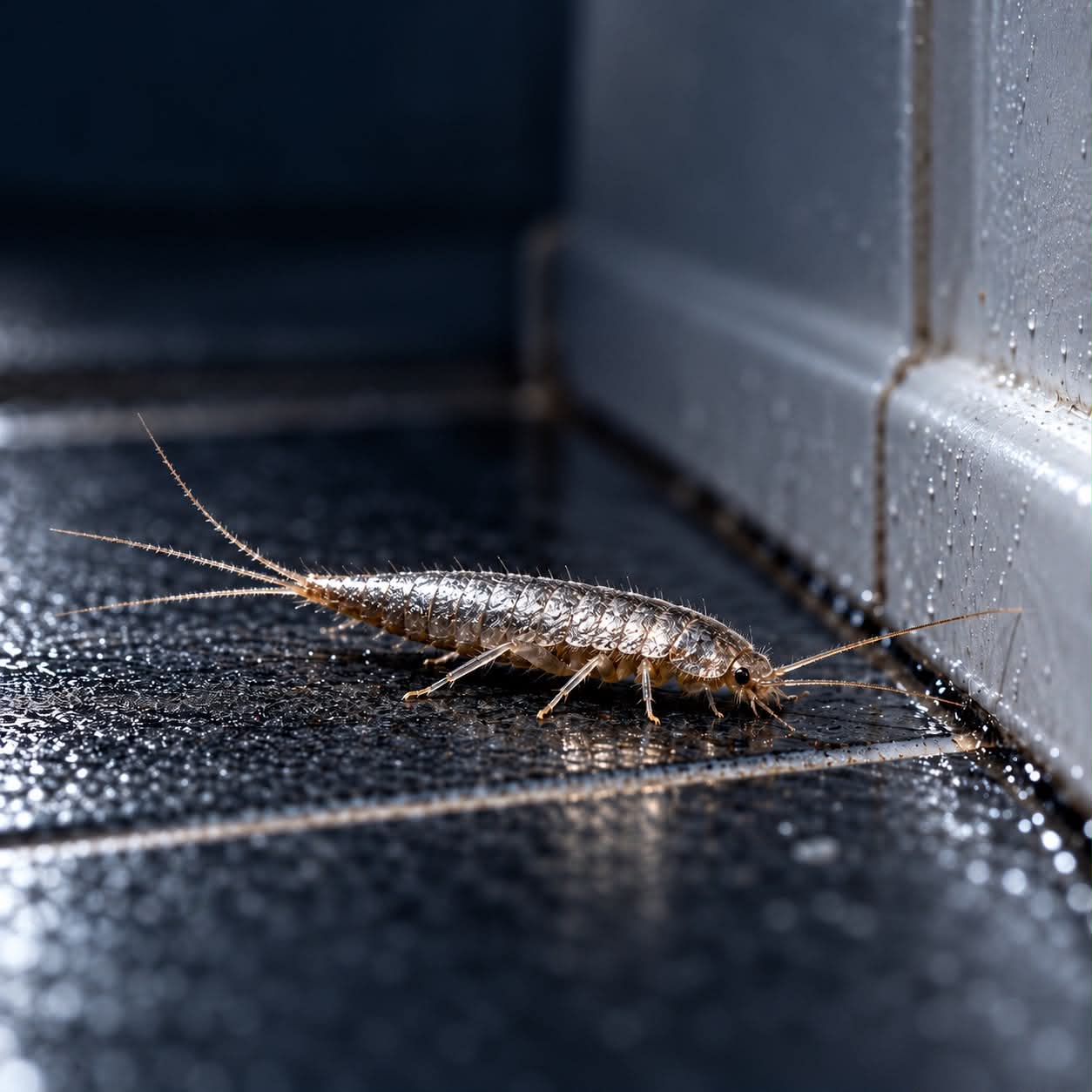
A flash of silver across the bathroom floor, then nothing. Silverfish are quick to disappear, but their presence can reveal something worth investigating. Behind the skirting boards, your property could be offering these unwelcome guests the perfect combination of moisture, shelter and food.

These small, wingless insects are most active at night, emerging from hidden spaces to feed. They can remain active throughout the year indoors, while autumn and winter condensation can create particularly favourable conditions for common silverfish.

What makes them feel at home?

Five common attractions could be encouraging them to settle in:

  1. Lingering moisture. Steamy bathrooms, condensation and leaking pipes create the damp conditions common silverfish favour.
  1. Poor ventilation. Drying washing indoors and leaving wet towels in rooms without adequate airflow can increase humidity.
  1. Paper and cardboard. Undisturbed books, newspapers and packaging can provide food and shelter.
  1. Starchy food debris. Crumbs and other carbohydrate residues provide an accessible meal.
  1. Hidden spaces and wallpaper paste. Gaps behind skirting boards and loose wallpaper offer shelter, while paste and bookbinding glues can become part of the menu.

Silverfish do not bite or spread disease to people, but they can cause damage particularly to wallpaper and other materials. Repeated sightings deserve attention, particularly where damp may be involved.

Improving ventilation, repairing leaks and removing food debris are sensible first steps. However, different silverfish species have different moisture requirements, making correct identification essential to effective control.

DON’T LET A SILVER FLASH BECOME A REGULAR FIXTURE

Spotted silverfish in your home or business? Contact Concept Pest Control today to book a professional survey. Let our team investigate the activity, identify the pest and recommend targeted treatment and practical prevention measures to bring the infestation under control.

T: +44 28 9061 0999
E: pestcontrol@the-concept-group.com
W: conceptpestcontrol.co

The Concept Group
FIVE Divisions | ONE Complete Solution

Don’t take the bait. Call the professionals..

Buying rodent bait is no longer simply a matter of picking a product off the shelf. Since 1 January 2026, stricter UK certification requirements apply to purchasing and using professional rodenticides. For farms and businesses tackling rats or mice, there has never been a better reason to put the problem in professional hands.

What has changed?
Under the CRRU UK stewardship requirements, buyers must provide either:

  • Certification from a CRRU UK approved training course completed within the previous five years.
  • An older approved certificate, supported by current membership of a CRRU UK approved Continuing Professional Development scheme and compliance with its requirements.

Farm assurance membership alone is no longer accepted as proof of competence. Evidence must be presented at purchase, alongside the required purchaser declaration. These changes concern professional rodenticides, the products used to control rats and mice, rather than every type of pesticide.

Effective control takes more than bait.

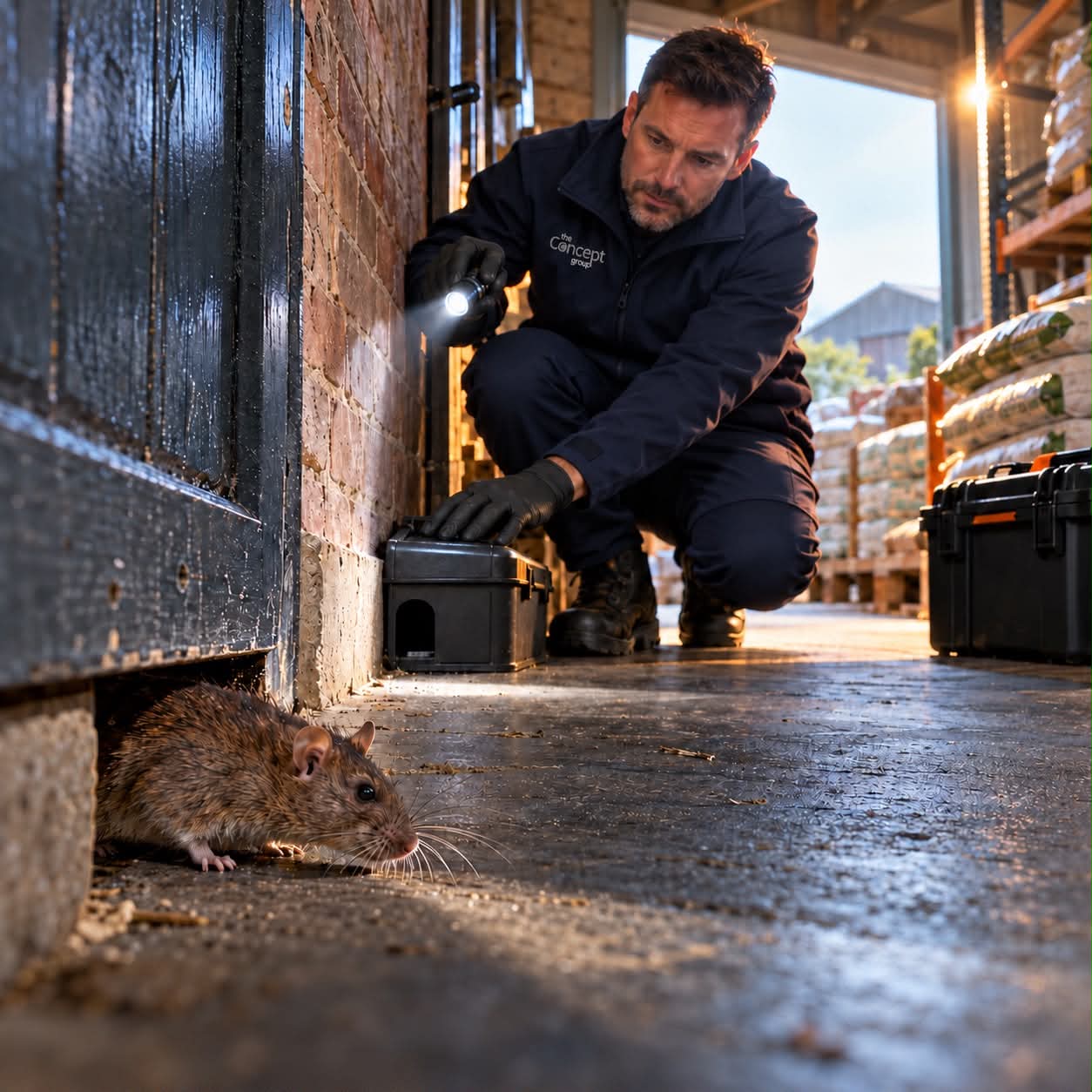
Finding where rodents enter, what sustains them and where they hide is essential to tackling the problem. A professional approach combines inspection, appropriate treatment, monitoring and practical prevention, with responsible product use that considers risks to people, pets and wildlife.

All Concept Pest Control technicians are fully qualified and certified, giving you the reassurance that your rodent problem is being handled by professionals with the appropriate training and expertise.

At Concept Pest Control, we look beyond the immediate infestation to help you address the conditions behind it.

LEAVE THE GUESSWORK OUT. BRING THE PROFESSIONALS IN!

Contact Concept Pest Control today to book a professional survey and discuss a targeted rodent management plan for your farm, business or property.
T: +44 28 9061 0999
E: pestcontrol@the-concept-group.com
W: conceptpestcontrol.co

The Concept Group
FIVE Divisions | ONE Complete Solution

Bluetongue doesn’t need a border..

Protecting Northern Ireland’s herds starts before the first warning signs appear
A newly confirmed case of bluetongue in County Wexford is a timely warning for livestock farmers across Northern Ireland: disease risk does not stop at a county line or national border.

The case involved an unvaccinated 16-month-old heifer that reportedly showed no obvious clinical symptoms before its death. Its detection reinforces an uncomfortable reality an animal may be infected even when nothing appears visibly wrong.

When the warning signs can remain hidden, prevention must remain visible.

A small insect can create a serious problem
Bluetongue is transmitted primarily through the bites of infected Culicoides midges. These tiny flying insects can spread the virus between susceptible animals, including cattle and sheep.

Their size makes them easy to underestimate, but the consequences for animal health, herd productivity and farm operations can be significant.

With the virus circulating extensively in Britain and cases detected across Ireland during 2026, livestock owners should review their protective measures now not after symptoms appear.

Know what to watch for
Animals affected by bluetongue may display signs including:

* Fever

* Loss of appetite

* Lethargy

* A reduction in milk yield

* Lesions around the mouth

* Changes to the mucous membranes

* Swelling of the face, lips or tongue

However, the Wexford case demonstrates that visible symptoms may not always be present.

Any unexplained illness or mortality should be taken seriously. If bluetongue is suspected, isolate the affected animal immediately, contact your veterinary practitioner and report the case to the appropriate government animal-health authority.

Vaccination remains the frontline defence
Official veterinary guidance identifies vaccination against BTV-3 as the most effective protective measure available. Farmers who have not yet vaccinated should speak directly with their private veterinary practitioner about the suitability and timing of vaccination for their herd or flock.

Professional pest management cannot replace vaccination, veterinary supervision, disease surveillance or statutory reporting. It can, however, strengthen a broader farm-protection strategy by helping to identify and manage conditions that may encourage biting-fly and midge activity around livestock facilities.

Make the farm less inviting to biting insects
A proactive inspection should consider the entire livestock environment not simply the animals themselves.

Potential pressure points can include:

* Standing or slow-moving water

* Blocked drains and poorly maintained drainage channels

* Persistently wet ground around troughs and housing

* Accumulated organic matter

* Damp waste-storage areas

* Areas of poor ventilation or excessive moisture

* Unmanaged insect activity inside and around livestock buildings

Removing breeding opportunities, improving drainage, addressing moisture and introducing an appropriate monitoring programme can help reduce insect pressure around vulnerable animals.

Any insect-control products must be selected and applied correctly, in accordance with their labels and all relevant regulations. Treatments around livestock, feed, water and occupied buildings require particular care and professional assessment.

Protection is a system not a single treatment

Bluetongue preparedness should bring several safeguards together:

  1. Discuss BTV-3 vaccination with your veterinary practitioner
  2. Monitor animals closely and investigate unexplained illness or death
  3. Isolate and report suspected cases immediately
  4. Review drainage, water accumulation and organic waste
  5. Assess livestock buildings for insect pressure and entry points
  6. Use professional, targeted pest-management measures where appropriate
  7. Continue following the latest guidance from DAERA and your veterinary team

No individual measure can provide absolute protection. A coordinated approach gives farmers the strongest possible position from which to protect livestock and respond quickly when something is wrong.

DON’T WAIT FOR THE HERD TO SHOW YOU THE RISK
The latest confirmed case is more than a headline it is a reminder that vigilance matters even when animals appear healthy.

Concept Pest Control can carry out a professional assessment of your farm or livestock premises, identify conditions contributing to biting-insect activity and develop a responsible management programme suited to your environment.

Protect the buildings

Reduce the pressure

Strengthen your line of defence

Contact Concept Pest Control today
T: 028 9061 0999
E: pestcontrol@the-concept-group.com
W: conceptpestcontrol.co

When the temperature falls, the risk moves in..

Why Northern Ireland properties should prepare for increased rodent activity this autumn.

The warm weather may be fading, but the consequences of an exceptionally hot summer could be about to arrive at our doors.

Extended periods of warmth provide favourable conditions for rodents to feed, breed and establish themselves outdoors. When temperatures fall and wetter weather returns, rats begin searching for somewhere warmer, drier and closer to a reliable food source.

For many, that destination will be a home, business, farm or commercial premises.

Recent industry figures suggest that confirmed pest activity across the UK increased by 10% between 2024 and 2025. Northern Ireland recorded the sharpest regional rise, with activity reportedly increasing by 26%.

That figure should serve as a warning: the time to protect a property is before rodents find their way inside.

Rats do not need an open door
A rat does not need an obvious entrance to gain access to a building. Weaknesses around pipes, damaged air vents, gaps beneath doors, broken drainage systems and openings in external walls can all provide a route inside.

Once established, rodents can move through wall cavities, roof spaces, suspended floors and service ducts without being seen. They may remain hidden during the day, meaning the first warning is often not a sighting but the evidence they leave behind.

Early signs can include:
* Dark, capsule-shaped droppings

* Scratching or scurrying sounds, particularly at night

* Gnawed food packaging, timber, pipework or electrical cables

* Greasy rub marks along walls and skirting boards

* Shredded paper, fabric or insulation used as nesting material

* A persistent, unpleasant or musky smell

* Burrows near sheds, decking, bins, compost areas or foundations

* Unexplained pet agitation around floors, walls or cupboards

Finding one sign does not always reveal the true scale of the problem. Rats are cautious, largely nocturnal and extremely effective at remaining out of sight.

More than an unwelcome visitor
A rodent infestation is not simply unpleasant. It can create serious health, safety and financial consequences.

Northern Ireland’s Health and Safety Executive warns that rats and mice can carry diseases, damage buildings and spoil food. Rats may contaminate surfaces and stored products through droppings, urine, fur and contact with waste or drains. They can also introduce secondary pests such as fleas and mites. HSENI guidance on rodent control⁠.

Their constant need to gnaw presents another significant risk. Electrical cables, plastic water pipes, insulation, plasterboard and timber can all be damaged. A concealed cable that has been stripped of its protective coating may create an electrical fault or fire risk, while a damaged pipe can cause leaks that remain unnoticed until substantial damage has occurred.

The cost can escalate quickly and householders should not assume their insurance will automatically meet it. Vermin infestations and damage arising from poor maintenance are commonly excluded from standard home-insurance policies. Cover varies, so property owners should check their own policy rather than waiting until damage has occurred.

What Northern Ireland property owners need to know
Rodent control is also a matter of responsibility, not only personal preference.

Where an infestation, accumulation of waste or condition of a property presents a risk to health or affects neighbouring premises, the relevant council’s Environmental Health service may investigate and advise on the action required. Pest-control services differ between council areas: some councils provide treatment, while others offer advice only. nidirect guidance on pest-control services⁠.

Businesses particularly those storing, preparing or serving food must maintain effective procedures to prevent pests from contaminating food or entering food-handling areas. An infestation can place hygiene standards, customer confidence and commercial reputation at immediate risk.

Rodenticides are also regulated products. In Northern Ireland, relevant biocidal products are governed by the EU Biocidal Products Regulation. Only authorised products should be used, and every product must be applied strictly in accordance with its label and conditions of use. HSENI rodenticide requirements⁠.

Careless placement of poison can endanger children, pets and wildlife while failing to resolve the source of the infestation. Effective rodent control requires more than putting down bait—it requires correct identification, risk assessment, proofing, monitoring and safe treatment.

Seven practical ways to make your property less inviting

1. Find and seal possible entry points
Inspect exterior walls, foundations, doors, vents and the areas surrounding pipes and cables. Repair damaged brickwork and fit suitable rodent-resistant mesh or proofing materials where required.

Do not seal a suspected active route without first assessing the infestation. Trapping rodents inside a wall or roof space may create further problems.

2. Remove easy food sources
Store cereals, pet food, bird seed and other dry goods in strong, sealed containers. Clean spills promptly and avoid leaving food, dirty dishes or pet bowls accessible overnight.

3. Manage household waste properly
Keep bin lids fully closed, avoid overflowing containers and clean away food residue. Loose rubbish bags provide both food and nesting material.

4. Make gardens less attractive
Clear dense undergrowth, discarded materials and clutter around sheds or outbuildings. Raise stored items off the ground and avoid allowing vegetation to provide sheltered routes directly to the building.

5. Review composting and bird feeding
Do not add meat, fish or dairy waste to open compost systems. If feeding birds, avoid excessive quantities that leave seed scattered on the ground overnight.

6. Remove avoidable water sources
Repair leaking outdoor taps and pipes, clear blocked gutters and drains, and empty containers holding stagnant water. Rats need regular access to water and will exploit reliable sources.

7. Act at the first sign
Do not wait until a rat is seen during daylight or damage becomes obvious. By that stage, the infestation may already be established.

Why DIY deterrents may not be enough

Strong scents, peppermint oil and ultrasonic devices are often promoted as simple ways to repel rats. However, they should not be relied upon to resolve an active infestation.

At best, a deterrent may temporarily change a rodent’s behaviour or route. It does not necessarily remove the animals, locate their nesting area, close their access points or eliminate the conditions attracting them.

A successful programme must answer four important questions:
* Which rodent species is present?

* How is it entering the property?

* What is supporting the infestation?

* How can the problem be removed without simply displacing it?

That is where professional assessment makes the difference.

STOP THE PROBLEM BEFORE IT MULTIPLIES
Rodents reproduce quickly, travel through hidden parts of a building and rarely disappear simply because their presence has been disturbed.

Concept Pest Control provides professional rodent inspections, targeted treatment and practical prevention advice for homes, landlords and businesses throughout Northern Ireland.

Our approach looks beyond the visible signs. We work to identify the source of the activity, locate potential entry routes, assess contributing conditions and develop an appropriate control strategy for the property.

If you have heard scratching, discovered droppings, noticed gnawing or simply want your premises checked before colder weather arrives, now is the time to act.

DON’T GIVE RODENTS A WINTER HOME.
Contact Concept Pest Control your trusted partner in professional rodent control.
T: 028 9061 0999
E: pestcontrol@the-concept-group.com
W: conceptpestcontrol.co

Rodents Aren’t Waiting for Winter

Rodents Aren’t Waiting for Winter
Why farms may need to rethink the traditional pest control calendar

For generations, the arrival of colder weather has been the familiar signal for farmers to start thinking seriously about rats and mice moving indoors.

This year, the warning signs are appearing much earlier.

Recent reporting by the Irish Farmers Journal has highlighted warnings that rodents could already be moving towards farmyards, sheds and agricultural buildings as a combination of prolonged dry conditions and an earlier harvest reduces the food, water and cover available within their established habitats.

For farmers and agricultural businesses, the message is simple:
Don’t wait for winter to think about rodents.

By the time rats or mice become an obvious problem inside a building, they may already have found the shelter, food and conditions they need to become established.

WHEN THE HARVEST MOVES OUT, RODENTS CAN MOVE IN
According to the Irish Farmers Journal, Ross Goodman, Technical and Key Accounts Director at LodiUK, has warned that the combination of an earlier harvest and prolonged drought conditions can displace rodents and encourage them to seek alternative sources of food and water around farmyards and buildings

As Goodman explained: “Vegetation is very dry and, combined with crops coming in earlier, there is less food and cover available to rodents, which will push them elsewhere.”

That “elsewhere” can very quickly become the farm.

Feed stores, grain stores, livestock housing, machinery sheds, workshops, silage areas and other agricultural buildings can offer rodents many of the things disappearing from their outdoor environment: food, water, shelter and somewhere relatively undisturbed to establish themselves.

The concern is therefore not simply that traditional autumn rodent activity may have arrived a few weeks early. It is that the traditional pest control calendar itself is becoming less dependable.

Goodman told the Irish Farmers Journal: “Farmers can no longer rely on the typical four seasons to predict when rodent pressure will begin.”

For Concept Pest Control, that is an important point. Pest management should respond to conditions and evidence, not simply the date on the calendar.

THE PROBLEM YOU SEE MAY NOT BE THE PROBLEM YOU HAVE
Spotting one rat crossing a yard does not necessarily tell you the full extent of the activity.

Rodents can exploit gaps around doors, damaged building fabric, drainage routes, service penetrations and other access points. Once suitable harbourage and food are available, activity can become established in areas that are difficult to see during normal day-to-day farm operations.

The objective should therefore be to identify the warning signs before rodent pressure develops into a larger operational problem.

Farmers and agricultural businesses should remain alert for:
– Droppings around feed, storage and sheltered areas
– Gnaw marks or damage to packaging, timber, insulation or other materials
– Disturbed or contaminated feed
– Burrows around buildings, banks, walls or external storage areas
– Greasy rub or smear marks along frequently travelled routes
– Scratching or movement within walls, ceilings or stored materials
– Damage around doors, vents and potential entry points
– Unexplained sightings, particularly around dusk, dawn or quieter periods

The Irish Farmers Journal report reinforces the importance of early identification, with Goodman advising that measures should already be in place to identify activity before populations become established.

RODENT CONTROL IS ABOUT MORE THAN REMOVING RODENTS
Effective agricultural pest management should not begin and end with treatment.

A professional approach considers the wider environment that is allowing the problem to occur.
– Where are rodents entering?
– What is attracting them?
– Where are they feeding?
– Where are they finding water?
– Where are they harbouring?

And what can be changed to make the site less attractive to them?

That is why Concept Pest Control takes a proactive, site-led approach to rodent management.

Depending on the requirements of the individual site, this can include professional inspection and assessment, identification of activity and potential harbourage, monitoring, appropriate control measures, advice on proofing and access points, identification of environmental factors contributing to activity, ongoing servicing and documented pest-management support.

It is about achieving control today while helping to reduce the conditions that could create another problem tomorrow.

PROTECTING MORE THAN THE BUILDING
Rodent activity on agricultural premises should never be regarded as simply an inconvenience.

Rodents can foul or damage animal feed and stored materials, damage building infrastructure and create additional biosecurity concerns. LodiUK’s own agricultural guidance identifies reducing feed loss or fouling, helping prevent disease transmission and protecting wiring, insulation and other infrastructure among the reasons rodent management forms an important part of farm biosecurity. (Lodi UK Ltd⁠)

Electrical wiring is a particular example of why seemingly minor activity should not be ignored. Gnawing can turn a pest issue into a maintenance, operational or potentially serious safety concern.

For a working farm, where buildings, livestock, machinery, electrical systems and valuable feed can all exist within the same environment, prevention and early intervention make sound business sense.

DON’T LET THE FIRST SIGHTING BECOME AN INFESTATION
The Irish Farmers Journal report also highlights the importance of assessing the extent and location of rodent activity before deciding upon the appropriate response.

Goodman advises: “Once you find evidence of rodents, that is the point to assess the scale of the problem and decide on the most appropriate control.” (Dairy Day⁠)

The report further notes that treatment should follow best practice, considering the scale of the infestation and beginning with the least-toxic effective option. (Dairy Day⁠)

That reinforces an important principle: Professional pest management is not simply about putting bait down.

It is about understanding the site, assessing the level of activity and implementing an appropriate, responsible and proportionate control strategy.

THE SEASONS MAY BE CHANGING. YOUR PEST STRATEGY SHOULD CHANGE WITH THEM.
An early harvest may be good news operationally, but changing environmental conditions can have consequences elsewhere.

If dry vegetation, reduced cover and depleted food or water sources are pushing rodents from their normal habitats earlier, waiting until the traditional autumn or winter period to inspect agricultural buildings could mean giving them valuable time to settle in.

The best time to deal with an established rodent problem is as quickly as possible.

The better time is before it becomes established.

Concept Pest Control works with agricultural, commercial and industrial clients to help identify pest risks, address active problems and implement professional pest-management programmes designed around the individual premises.

Whether you have already noticed signs of rats or mice, have concerns around feed stores or livestock buildings, or simply want your farm assessed before seasonal pressure increases, our team can help.

SEE THE SIGNS EARLY.
ACT BEFORE THEY SETTLE IN.
Contact Concept Pest Control today to arrange a professional pest assessment and discuss a proactive rodent-management programme for your farm or agricultural premises.

T: 028 9061 0999
E: pestcontrol@the-concept-group.com
W: conceptpestcontrol.co
Concept Pest Control – Your Trusted Partner in Professional Pest Management.

Protecting one of Belfast’s Newest Landmarks

A great piece of work by the Concept Pest Control team at Belfast Grand Central Station.
Our technicians, Caleb and Jaydan, recently carried out a discreet night-time installation of Bird Free Gel on selected station signage and the new public statue after birds had begun perching on the structures, leaving unsightly fouling and creating unnecessary maintenance issues.
Before installation, the affected areas were professionally cleaned, with the Bird Free Gel then carefully applied to provide an effective, humane bird deterrent. The work was completed overnight to minimise disruption and ensure the safety and convenience of the public.
Early intervention helps protect valuable public spaces, reduces ongoing cleaning costs, and preserves the appearance of high-profile landmarks.
If birds are causing problems at your commercial premises, public building, retail site, or industrial facility, contact Concept Pest Control today for a professional bird management solution tailored to your property.

Sometimes the smallest rescues make the biggest difference

Today our team paused the job to help a tiny bird in need, ensuring it was safely rescued and temporarily  rehomed currently at Concept House before continuing our work.
At Concept Pest Control, protecting properties also means respecting the wildlife and environment around us. Every living creature deserves care, and whenever we can help, we will.
Because great pest management is about responsibility, compassion, and doing the right thing.

Add pest proofing to garden jobs this autumn, says BPCA

PESTAWARE
Gardeners across the UK are being urged to look at protecting their plots from public health pests this autumn, says Technical Manager at British Pest Control Association (BPCA), Natalie Bungay.
Gardeners who take steps to deter pests in the autumn could reap the rewards over the coming months without even realising it.
public health pests can bring disease, damage property and cause a great deal of distress if they infest a home or garden.
In the autumn, gardeners are generally looking ahead to the next growing season, planting bulbs, tidying hedges and thinking about winter colour.
But it’s also an ideal time of year to take a few simple steps to deter pests.

Spot the signs
Pests have traits and characteristics that help pest controllers (and gardeners) identify the species and understand whether or not they are likely to become a nuisance – or worse a health risk.
Obvious signs are usually either spotting the pest itself, or physical evidence such as droppings or nests.
Other indicators can include footprints, gnaw marks or damage to property.
Both rats and mice need to maintain their teeth and have been known to gnaw pipes, cables, metal, wood and even brickwork, while the presence of wasps can often be detected by marks on wooden garden furniture, sheds and windows, where thin lines of wood are stripped off for nest-building.
In some cases, species such as wasps can be left well alone if they are in a low-traffic area.
Wasps are accidental pollinators and natural pest controllers, so can be useful residents in the garden if they are likely to remain undisturbed. They will abandon the nest in the autumn, so unless they are becoming a nuisance, no action is needed.
Likewise, spotting a mouse in the garden isn’t necessarily a health risk, but we would recommend making sure your home and any outbuildings are proofed against entry and that adequate steps are taken to prevent them heading indoors.
If action is needed, it’s always better to act sooner rather than later, so becoming familiar with signs of pest activity is key to ensuring any potential problems are nipped in the bud.

Pest proofing
The main priority is removing anything that might attract pests into your home, garage or shed.
Possibly the most important thing to avoid is access to food sources – so ensure outdoor bins are kept securely closed, pick up any fallen fruit and remove bird feeders or keep them as far from the house as possible.
Compost heaps can be a key attraction for pests, offering both food source, possible harbourage and warmth. Turn it regularly, keep it moist and keep it covered.
Check the exterior of your home for any cracks or gaps where an uninvited guest might enter – these can be filled with wire wool and quick-drying cement. Mice can enter through a gap not much bigger than a pencil eraser and rats need only 15mm.
Clear any stagnant standing water – forgotten bird baths and watering cans can be ideal breeding grounds for mosquitoes and trim back any areas of undergrowth or long grass, which can be a perfect home for mites and ticks, as well as providing a covered highway for rats and mice.

Specific species
Both rats and mice may head indoors as the weather turns colder and they start to look for a warm sheltered spot with access to water and food.
If you suspect rats or mice have entered your property, we recommend taking action as quickly as possible. Both species can spread disease, and both have rapid breeding cycles which can cause an infestation to escalate swiftly.
While many insects are less likely to be active in the winter months, calls for False Widow Spiders tend to peak in October, and on rare occasions, Red Spider Mites can invade homes in large numbers in November.
Understanding the habits of the two different species of Red Spider Mites is crucial to their control, as one is encouraged by grass growing around a building, while the other is more likely to be attracted by concrete.
BPCA’s online A-Z of Pests offers a wealth of information and advice about specific species as well as helping gardeners understand if and when they should seek professional advice to deal with a pest problem.
Anyone concerned about pests should contact a BPCA member for help – our members are trained, experienced professionals with access to a range of specialist products that are not available to the public.
BPCA members are regularly assessed to the British Standard in Pest Management BS EN 16636 and are endorsed by the Government via the TrustMark quality scheme.

To find a professional pest controller visit bpca.org.uk/find