
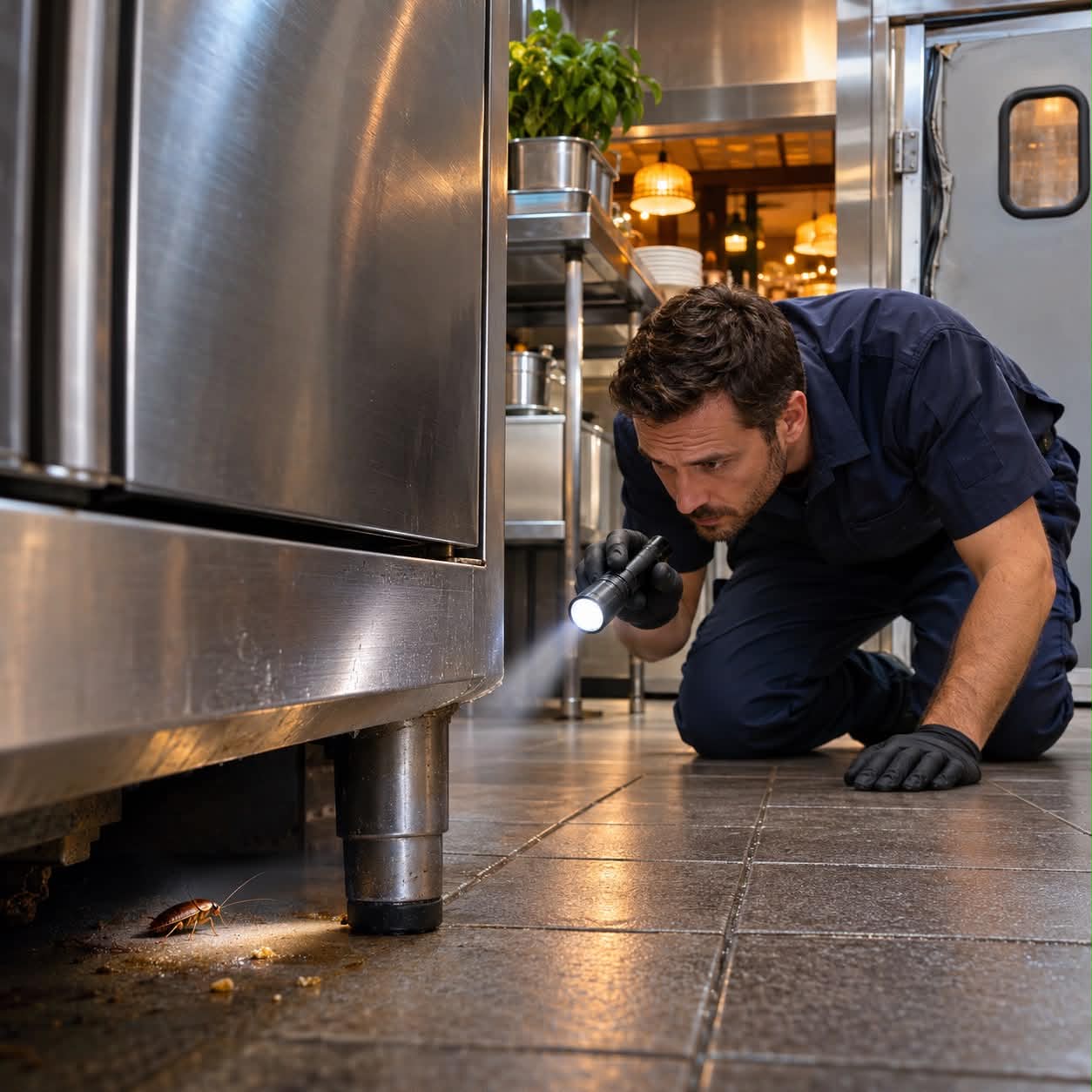
You’ve costed every ingredient, perfected the specials and trained your team to deliver service with a smile. But the most expensive thing in your kitchen might never appear on the menu. A damaged door seal, an overlooked spill or a pest-proofing repair left for “next week” can give unwanted guests an opening and leave your business picking up the bill.
Recent Irish food-safety reporting offers a timely reminder: a pest-control visit needs to lead to action, not simply another report in the folder.
The news behind the warning
On 15 October 2026, The Irish Times reported that September’s food-safety enforcement actions included premises with cockroach and rodent activity. In one case, inspection records identified ongoing rat activity alongside pest-proofing work that had not been completed.
The reported closure orders covered a range of food-safety failures; they were not all caused by pests. Nevertheless, the outstanding repairs illustrate an important lesson for food businesses: identifying a weakness does not remove it.
A report can identify the gap. It cannot seal it
Professional pest management works best when inspection, treatment, maintenance and day-to-day routines support one another.
If a technician recommends repairing an entry point, improving access for cleaning or changing waste-storage arrangements, give that action an owner and a completion date. Record what was done and arrange follow-up where needed.
Otherwise, the same conditions may remain in place between visits.
Six places to take prevention off the to-do list
For cafés, takeaways, restaurants and food retailers, these practical checks deserve regular attention:
* Doors and seals: Check damaged thresholds, worn seals and doors that do not close properly. Keep service entrances closed when not in use.
* Behind and beneath equipment: Include hard-to-reach areas in planned cleaning. Arrange safe access rather than moving heavy or connected appliances without suitable assistance.
* Food and spill storage: Keep ingredients securely contained, inspect damaged packaging and deal promptly with spills.
* Waste areas: Keep bins closed, avoid overflowing waste and clean up residues around storage and collection points.
* Staff reporting: Make sure everyone knows whom to tell about droppings, gnawed goods, damaged packaging or live insects. Record where and when evidence was noticed.
* Outstanding recommendations: Review pest-control reports, prioritise corrective work and check that completed repairs are effective.
These are useful discussion points for your next professional inspection, not a substitute for one.
Protect more than the stockroom
Suspected pest activity requires prompt assessment because food, packaging and preparation areas may be affected. Ask for professional advice on the immediate response, including protecting food and restricting use of affected areas where necessary.
The commercial consequences can extend beyond treatment: interrupted trading, wasted stock, additional cleaning and difficult customer conversations. Prevention deserves the same management attention as food quality and service.
Keep unwanted guests off the menu
Your customers should remember the food, the welcome and the reason they want to return.
Call in the experts before an overlooked gap becomes a costly interruption. Contact Concept Pest Control today to arrange a professional inspection and review your premises, pest activity and outstanding prevention measures.
Discreet, professional pest control for homes and businesses across Northern Ireland, the Republic of Ireland and the UK. 24/7 emergency response available.
Contact Concept Pest Control
T: +44 28 9061 0999 | E: pestcontrol@the-concept-group.com | W: conceptpestcontrol.co
The Concept Group | FIVE Divisions | ONE Complete Solution