
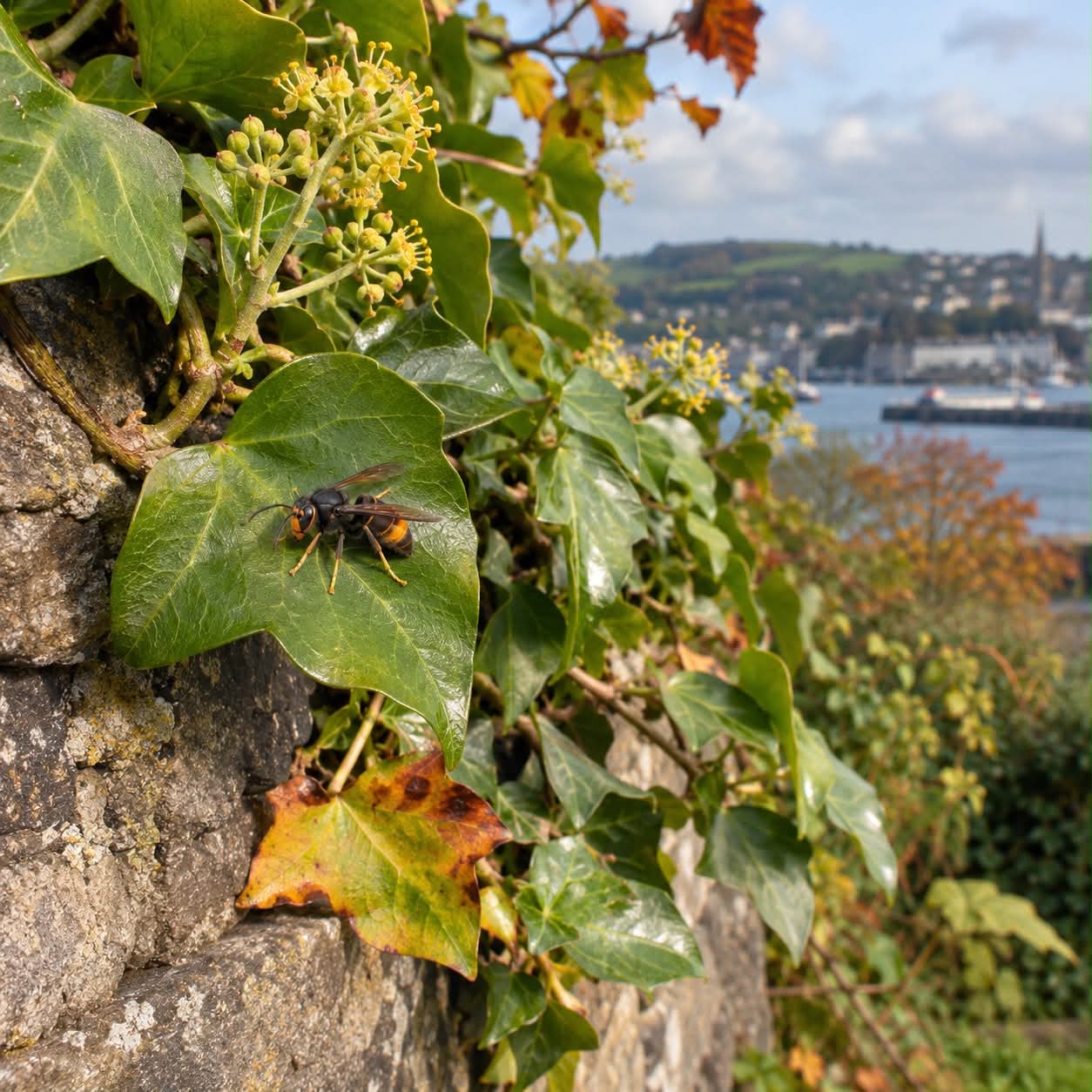
One sharp-eyed observer. One reported insect. Then a miniature tracking operation with something much bigger at stake. When an Asian hornet was spotted in Cork, the response became a real-life detective story, following a tiny transmitter back to a nest that needed finding.
It is a striking example of how public vigilance, accurate identification and specialist action can work together to protect Ireland’s pollinators.
The Cork discovery
In an update published on 27 October 2026, the National Biodiversity Data Centre described how a member of the public reported an Asian hornet at Ringaskiddy, Co. Cork, through its Asian Hornet Reporter.
The sighting and subsequent capture triggered a response led by the National Parks and Wildlife Service. Further monitoring detected another hornet, and miniature transmitters were attached to hornets to trace their movements. The nest was located and controlled. According to the update, this was the first use of these tracking transmitters on hornets in Ireland.
The important part? The investigation began with someone noticing and reporting.
Why this particular visitor matters
The yellow-legged Asian hornet, Vespa velutina, is an invasive non-native species. It preys on insects, including honeybees and other pollinators, and could affect native biodiversity and crop pollination.
The Cork discovery does not demonstrate that Asian hornets are widespread across Ireland. It reinforces the value of detecting and investigating suspected sightings early.
Know the features before sounding the alarm
Several insects can be mistaken for Asian hornets. Look for a combination of features:
* A predominantly dark body, with a dark brown or black thorax
* An orange face
* A prominent yellow-orange band towards the rear of the abdomen
* Legs with distinctive yellow tips
* Workers up to approximately 2.5cm long, with queens reaching around 3cm
Size alone is not enough for identification. A clear photograph is far more useful than a description of “a very large wasp”.
Spot it. Photograph it safely. Report it
If you suspect an Asian hornet:
* Keep your distance, particularly from a suspected nest
* Take a photograph if safe, without approaching or disturbing it
* Record the location and date
* Submit the sighting through the appropriate official reporting route
* Leave investigation and nest control to specialists
Do not disturb a suspected nest or target other insects because they look similar. Accurate identification helps protect beneficial species as well as direct the response where it is needed.
Where to report
Republic of Ireland: Use the official Asian Hornet Reporter, including a photograph.
Northern Ireland: DAERA advises reporting suspected sightings, ideally with a photograph, through the Asian Hornet Watch app. Identification guidance is available through Invasive Species Northern Ireland.
A small observation can make a significant difference
You do not need to identify the insect with certainty before submitting a suspected sighting. You need to report what you have observed safely and let the specialists assess the evidence.
For suspected Asian hornets, official reporting comes first. For advice about other wasp, insect or pest concerns around your home or business, contact Concept Pest Control for professional assessment.
T: +44 28 9061 0999
E: pestcontrol@the-concept-group.com
W: conceptpestcontrol.co
The Concept Group | FIVE Divisions | ONE Complete Solution